A chronograph is a watch with a stopwatch inside it. Push a button and a central seconds hand starts running; push again and it stops; push a third time and it resets. Subdials count the minutes that have elapsed, and on the watches below a tachymeter track or similar scale sits around the edge. That is the whole idea, and it is why chronographs have been the default answer to the question of what a watch is for besides telling the time.
It is also why they are expensive to build. A plain watch has to drive the hands. A chronograph has to drive the hands, hold a second set of hands in reserve, and engage and disengage them on command, all in a case that has to stay wearable. Every spec on the sheet is shaped by that. Thickness grows. The movement gets more parts. The price climbs faster than the size does. Reading a chronograph sheet is mostly a matter of seeing which of those costs the maker chose to pay and which it chose to dodge.
We looked at everything in our inventory that is a chronograph, and the list is short: three watches. We could have padded it with a digital that has a stopwatch mode, and we did not, because a digital stopwatch is a different product with a different buyer. Three real chronographs with figures we can cite is a better guide than six with filler. The guide is planned to grow to six, and it will grow when the inventory does.
What the money buys
The three picks sit at very different prices, and the spread is the main lesson of the category.
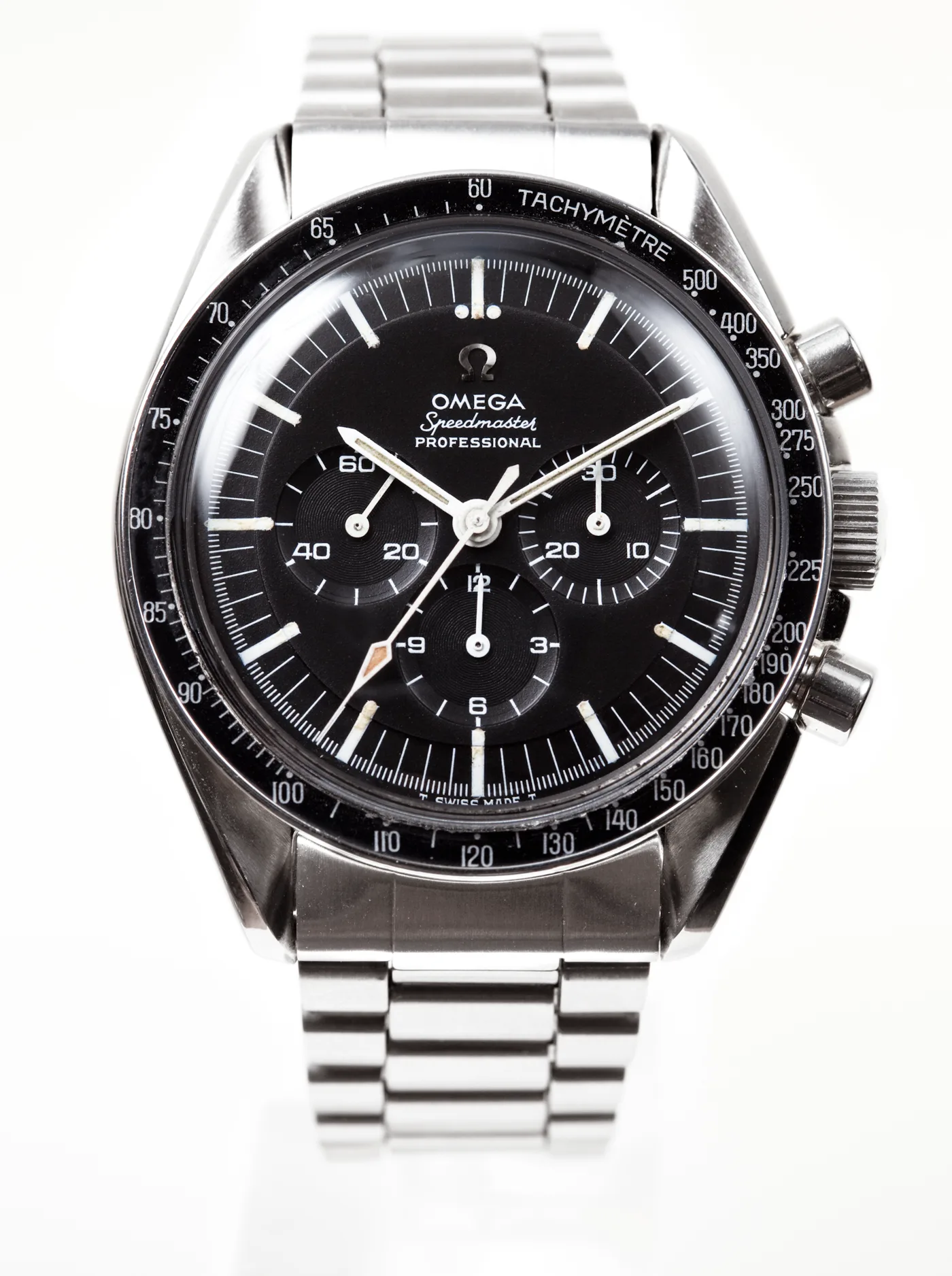
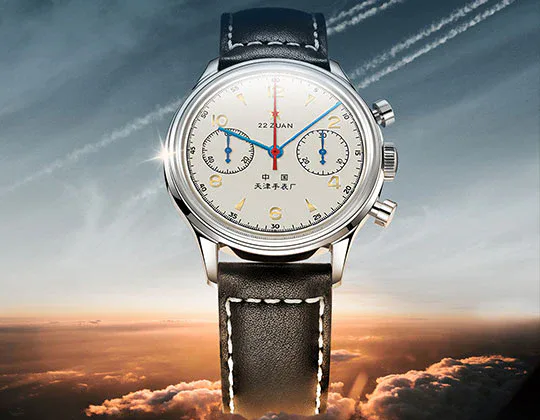
At the top is the Omega Speedmaster Professional, with a street band of $6,650 to $7,800. At the bottom is the Bulova Lunar Pilot at $375 to $595. In between is the Seagull 1963 at $749 to $825. The Omega costs roughly eight to ten times the Seagull. The hypescore gap between them is one point: 83 against 82.
That is not a claim that the two are the same watch. The hypescore is four sub-scores of movement, build, value and wearability, and the Omega wins the first by a distance, 24 against 21. What the Seagull wins is value, 23 against 15, and that is enough to close nearly the whole gap in the total. The Omega is the better machine. The Seagull is the better purchase. Which one you want depends on whether you are buying a machine or buying a watch to wear.
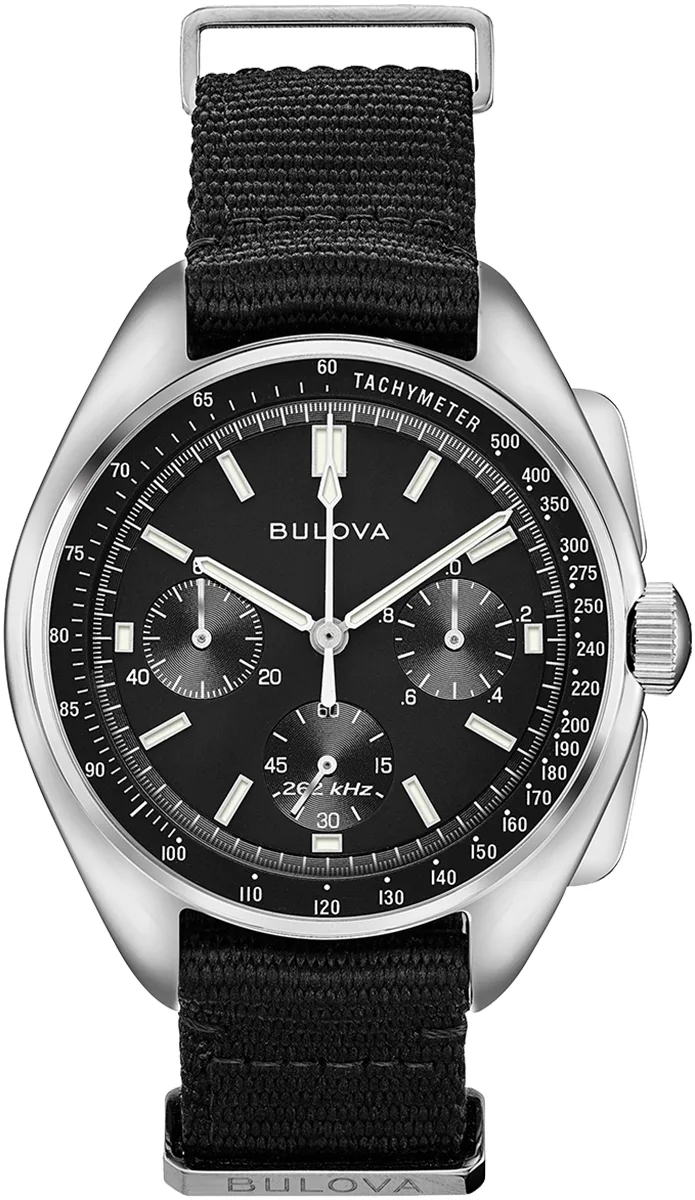
The Bulova scores 73. It is ten points behind the Omega, and the reason is not a bad movement; its movement score is 19, only five behind the Omega’s 24. It loses ground on build and wearability, both 17, which tells you more about the 45mm case than about the electronics inside it.
Hand-wound, manual and quartz
Two of the three picks are wound by hand. The Omega Caliber 3861 is a hand-wound chronograph, and the Seagull ST1901 is described by Seagull as manual winding with a column wheel. Neither has a rotor, so neither winds itself as you move. You wind them, usually every day, and the reserve figure tells you how long they run if you forget: 50 hours for the Omega, and 40 to 42 hours for the Seagull according to Seagull’s own FAQ.
That last number needs a note. The Seagull product page also claims about 45 hours in its marketing copy. We print the lower figure in the pick because it comes from the FAQ, the part of a page where brands tend to be more careful than in the headline. If your plan relies on the difference between 42 and 45 hours, do not buy a hand-wound watch.
The Bulova is quartz, so winding does not apply and there is no reserve to state. Bulova does not publish a battery life figure for this reference, and we will not guess at one. What it does publish is the movement: High Performance Quartz, six-hand chronograph, 262 kHz. The practical point of a quartz chronograph is that the stopwatch is simply there. You do not think about it and you do not wind it.
Column wheel and why the Seagull matters
The Seagull ST1901 is a column wheel chronograph. On the sheet this is one of the more telling phrases in the category, because a column wheel is the traditional way to run the pushers, and it is usually something you pay a lot more to get. Here it comes in a 40mm case for under $830, with a sapphire crystal and a 46.8mm lug to lug.
That combination is the reason it takes the value score. A hand-wound column wheel chronograph, a sapphire crystal and a dial with a tachymeter track and a 30 minute counter at 3 o’clock, for under $830. The inventory shows the dial layout with running seconds at 9, and the jewel count marking on the dial reads 22 ZUAN, which is how the brand labels it.
The costs are real, and the catch under the pick lists them. At 14.5mm it is thick, noticeably thicker than the Omega at 13.54mm, and the Omega is not a slim watch. Water resistance is 3 bar, which Seagull equates to 30m, so it is a watch to wear rather than to wet. There is no bracelet; it comes on a 20mm leather or NATO strap with a pin buckle. If you were planning on steel, this is not your watch.
The Omega, read properly
The Speedmaster Professional is the answer to most questions about chronographs, and it is worth reading what the sheet actually says rather than what the name implies.
The movement is Caliber 3861: hand-wound, Co-Axial escapement, METAS Master Chronometer certified. That is the movement score of 24, the highest in the guide. The case is 42mm wide, 13.54mm thick, with a 47.5mm lug to lug and 20mm lugs. The bracelet is steel with a five-link design and a folding clasp with a comfort extension, which matters on a watch this thick because wrists change through the day.
The crystal is Hesalite, an acrylic. Our sheet records the material, and a buyer should know it before spending four figures; it is not sapphire. Water resistance is 50m, or 5 bar. The Speedmaster is not a watch you buy for the water.
The value score is 15. That is the number to sit with. The Omega is the best chronograph here and the least efficient purchase. If you buy it, you are paying for the movement, the certification and the name, and the sheet backs the first two.
The Bulova, and what 45mm means
The Lunar Pilot is the cheapest watch here and the largest. The case is 45mm. For comparison the Omega is 42mm and the Seagull is 40mm. That is a large step up, and it is the main thing a buyer should know. Bulova does not publish the thickness, lug to lug or lug width in the source set we verified, and for a watch this size those are the figures that decide whether it sits on your wrist or hangs off it. Find a way to try one on, or measure your wrist against 45mm before you order.
What you get is a sapphire crystal with anti-reflective coating, a quartz movement that needs no winding, 50m of water resistance and a black NATO strap with a pin buckle. The heritage is real and specific: Bulova’s collection page states that a Bulova chronograph was worn on the moon on August 2, 1971. That page is for a different reference in the same collection, so we use it only for that line and attribute none of its dimensions to this watch.
The price band is wide, $375 to $595, which is a $220 spread for a single reference. That is a reason to shop around rather than a reason to doubt the watch.
How to read a chronograph spec sheet
A few habits help.
Start with thickness. It is the figure most buyers skip and most regret. A chronograph stacks a second mechanism on top of the timekeeping one, and the sheet will tell you the cost in millimetres. The Omega is 13.54mm. The Seagull is 14.5mm. Bulova does not say. A watch that looks right in photographs can be a different object once it is on your wrist.
Next, lug to lug. Case diameter is the number everyone quotes, but lug to lug is the number that decides fit on a smaller wrist. We have it for the Omega at 47.5mm and for the Seagull at 46.8mm. The Seagull is the shorter of the two despite being the thicker one.
Then the crystal. Two of the three have sapphire, the Omega has Hesalite. Neither is wrong, but it should be a choice you made.
Then the winding. Hand-wound means a daily ritual; quartz means none. If the ritual sounds like a chore, skip the Omega and the Seagull and do not feel bad about it.
Finally, the water resistance. All three picks are modest: 50m for the Omega, 30m for the Seagull and 50m for the Bulova. We print the rating and nothing more. None of these is a diver, and the chronograph is not a dive complication anyway.
What to skip
We left out any watch that merely has a stopwatch mode. The Casio F-91W is a fine, cheap, honest watch and it has a stopwatch, but it is a digital and it is not a chronograph in the sense this guide means.
We also did not pick on brand. The strongest names on our list belong to makers that do not appear here because they make no chronograph in our inventory. If a chronograph is missing from this page, it is missing because we have not verified its numbers, not because we have an opinion about it.
Who should buy which
If you want the best chronograph on our sheet and the budget is not the constraint, buy the Omega. It leads on movement, it has the certification, and the catches are a thick case, an acrylic crystal and 50m of water resistance, all printed above.
If you want a mechanical chronograph and a sensible bill, buy the Seagull. It is thick and it has no bracelet, but it hands you a column wheel chronograph and a sapphire crystal at a price that makes the comparison with the Omega faintly absurd. It is the pick we would make with our own money.
If you want the stopwatch to be dependable and the winding to be none of your business, buy the Bulova, after checking that 45mm suits your wrist.
This guide launches with three picks and is planned to grow to six. Three watches we can cite line by line beats six we cannot.