A hand-wound watch asks one thing of you: a minute of attention, once a day or once every few days. That is the whole proposition. There is no rotor swinging on your wrist and no battery waiting to die, just a crown, a mainspring and a habit. The revival in the title is not a trend piece. It is a plain observation that the inventory we track has a small, real cluster of watches where winding is the design, not a leftover feature, and that the cluster runs from $239 to $7,800.
First, a ruling on what counts. Plenty of automatics in our inventory also let you wind them by hand, and several are good watches: the Orient Bambino 38, the Seiko Presage Cocktail Time, the Junghans max bill Automatic and the Traska Freediver all list hand-winding alongside a self-winding movement. They are not on this list. A watch you can wind if you want to is a different object from a watch that only winds one way. This guide covers the second kind, and that leaves four.
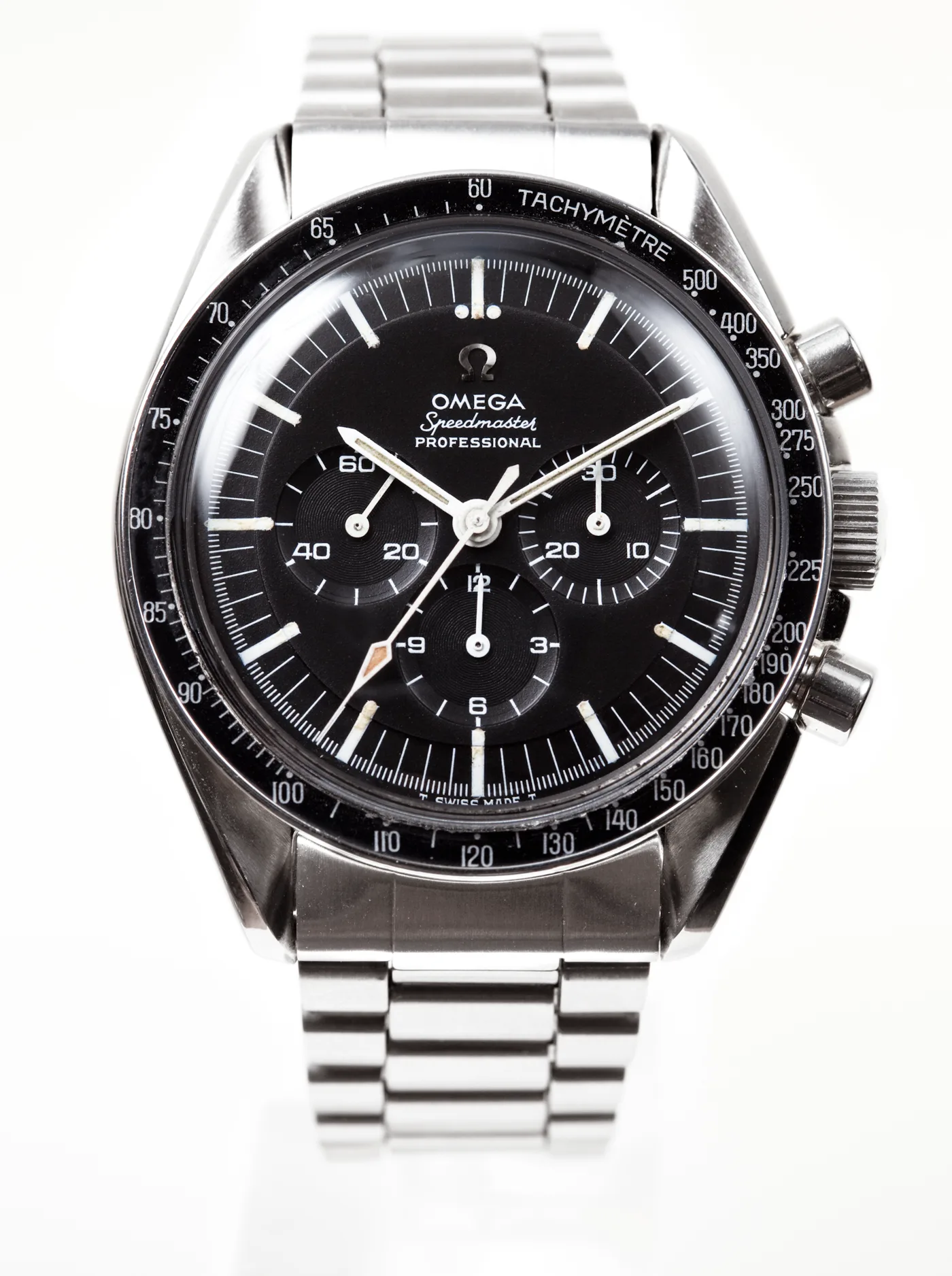
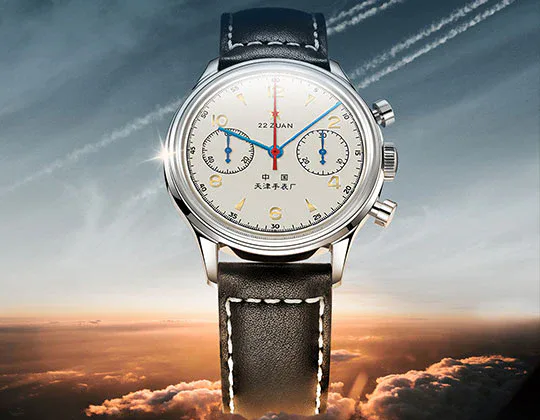
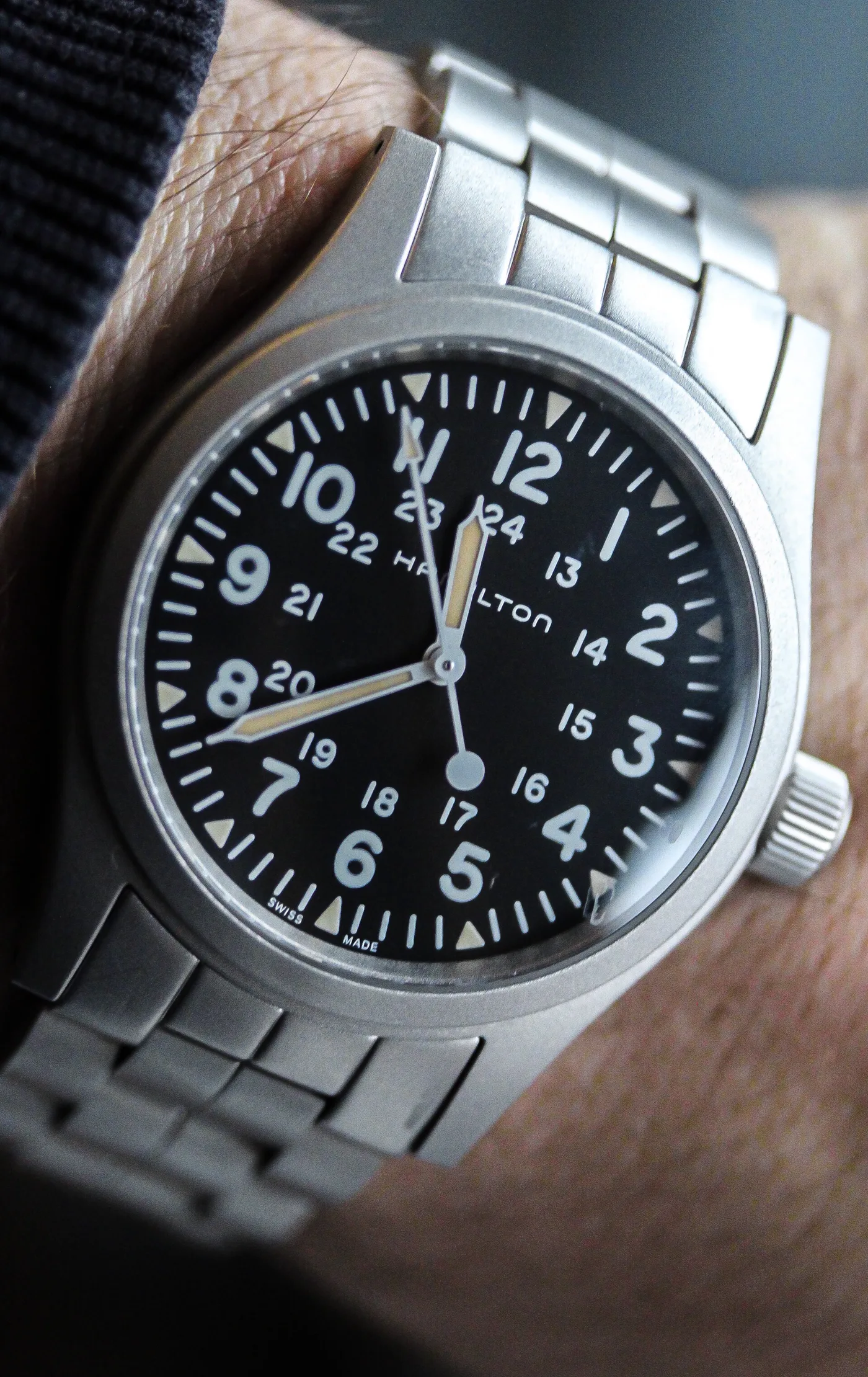
The four are the Omega Speedmaster Professional Moonwatch, the Seagull 1963 Chronograph, the Hamilton Khaki Field Mechanical and the Timex Marlin Hand-Wound. Two are chronographs, one is a field watch and one is a small dress watch. Their prices span a factor of roughly thirty, and the interesting part is how much of the experience survives the drop.
What winding actually buys is mostly a matter of the power reserve line. This is the first number to read on a hand-wound spec sheet, and it tells you how often the ritual happens. The Hamilton lists 80 hours. Wind it Monday morning and it is still running well into Thursday. The Omega lists 50 hours, so it wants winding about every other day if you rotate it out of a drawer. The Seagull lists 40 to 42 hours in its own FAQ, while the same product page claims approximately 45 hours in its marketing copy; we print the FAQ figure and flag the conflict. The Timex states approximately 40 hours. In practice that means the Hamilton fits a routine of winding at the start of the week, and the other three want a daily habit. If you will not commit to daily, the 80 hours is the entire argument for the Hamilton.
The second thing to read is the crystal, because hand-wound watches lean toward vintage materials and not all of those are upgrades. The Omega uses Hesalite, an acrylic. The Timex uses a domed acrylic. The Seagull and the Hamilton both use sapphire. Acrylic is not a flaw in this context; for these two it is part of what the watch is, and the Omega’s spec sheet names it plainly. But it is a real trade-off against scratch resistance, and a buyer who wants a watch that survives a desk without marks should look at the Seagull or the Hamilton first.
The third is water resistance, and here the category is honest and modest. The Omega is rated 50 m (5 bar). The Hamilton is rated 50 m. The Seagull and the Timex are rated 30 m. We will not tell you what any of those numbers means for a swim or a shower, because we do not publish advice beyond the printed rating. We will tell you that none of the four is a diver, and that if the sea is part of your plan, our diver guides are where to look. A hand-wound watch also has a crown you use every day, which is one more reason to read the rating as a number on a sheet and nothing more.
Size is where this category gets most opinionated. The Timex is a 34 mm case at 10 mm thick with an 18 mm lug width. That is small by modern standards, and the sheet does not hide it. The Hamilton is 38 mm on a 20 mm strap. The Seagull is 40 mm, 46.8 mm lug to lug and 14.5 mm thick, which is a tall watch for its diameter. The Omega is 42 mm, 47.5 mm lug to lug and 13.54 mm thick. Read those three numbers together, not diameter alone. A 40 mm case at 14.5 mm is a different proposition on the wrist from a 40 mm case at 10 mm, and thickness is the figure that decides whether a watch slides under a cuff. The Hamilton does not publish thickness or lug to lug in our verified source set, so we cannot give you either, and we would rather say so than guess.
Now the money, because the price spread is the story. At the top, the Omega lists at $6,650-$7,800. It carries a hypescore of 83, the highest of the four, with a movement score of 24, and that score is earned by a Caliber 3861 that is a hand-wound chronograph with a Co-Axial escapement and METAS Master Chronometer certification. Its value score is 15, the lowest of the four. That is the honest shape of an expensive watch: it is excellent and it is not cheap, and the sheet says both.
In the middle, the Seagull at $749-825 scores 82. Its movement is the ST1901, a manual-winding column wheel chronograph, which is a more elaborate construction than the price suggests. Its value score is 23, the highest of the four. If the question is what a hand-wound chronograph costs when nobody is charging for the name, this is the answer. The Hamilton at $500-595 scores 78, with value at 21 and movement at 20. The Timex at $239-259 scores 70, and its value score of 22 is respectable against a movement score of 15 and a build score of 16.
Those lower scores are worth a sentence, because a ranking that hides them is an advertisement. The Timex is the lowest-scoring watch on this list, and it is also the cheapest by a wide margin. Its movement is described by Timex only as a hand-wound mechanical with the caliber not officially named, which means we cannot tell you who made it or how it is finished. That is the price of $239-259 and the price of an unnamed movement. It is also, for a first hand-wound watch, a very cheap experiment in whether you enjoy winding at all.
The chronographs deserve their own note. Two of our four are chronographs. The Omega and the Seagull both wind by hand and both time events. The inventory gives no figure for what running the chronograph does to the reserve, so we make no claim about it. What the sheets do tell you is that the Omega has a solid steel bracelet with a folding clasp and comfort extension, while the Seagull is strap only, leather or NATO at 20 mm with a pin buckle, and no bracelet is offered. If you want a bracelet on a hand-wound chronograph, that is a one-line decision: the Omega, at a considerably higher price.
Straps are an underrated part of this list. The Hamilton ships on a NATO or leather strap at 20 mm. The Timex ships on a leather strap at 18 mm with quick-release spring bars. The Seagull is 20 mm on leather or NATO. Three of the four live on straps, and the sensible thing to do with a watch you handle every morning is to treat the strap as a consumable and the crown as the point of contact. The Omega alone sits on steel.
What to skip, and why. Skip the Omega if the purchase is about winding rather than about the object: at $6,650-$7,800 you are paying for certification and a movement score of 24, and the Hamilton gives you more reserve for under a tenth of the money. Skip the Seagull if 14.5 mm of thickness bothers you, or if you need a bracelet. Skip the Hamilton if you want a chronograph or a watch with any real water resistance; it is a time-only field watch rated 50 m. Skip the Timex if you have a wrist that wants a 40 mm watch, because 34 mm will look like a mistake on it. None of those skips are criticisms. They are the cost of each watch being specific.
One more honest limit. This category is thin in our inventory because we only add a watch once we can cite its sheet line by line. There are surely other hand-wound watches in the world, from brands that publish less or that we have not yet verified. The guide launches with four picks and plans up to six, and we will add them when the numbers are checked, not before. Four watches we can cite beats six we cannot.
How to choose among the four, then, in plain terms. If you want the best-scoring watch and money is not the constraint, the Omega is it, and its 83 is the highest on the list. If you want a hand-wound chronograph and you are looking at the price tag, the Seagull is the one, with the highest value score here. If you want to wind a watch twice a week and forget about it in between, the Hamilton, and its 80 hours is the figure to remember. If you want to find out whether you like winding for the price of a nice dinner, the Timex.
A final thought on the ritual itself. People who like hand-wound watches tend to say the winding is the point, that thirty seconds with the crown each morning is a small act of paying attention. We cannot back that with a spec, so we will not claim it. What we can back is simpler. Every one of these four does only what its sheet says, wants a crown turned on a schedule you can read off the power reserve, and tells you its limits plainly. In a market where plenty of watches are described as everything, that is a reasonably good reason for a revival.