ISO Divers and the 200m Myth
Two watches can print the same 200m and mean different things. One is a pressure figure. The other is a claim to have passed a whole battery of tests. Here is what that claim covers, where it stops, and why I would still take the second.
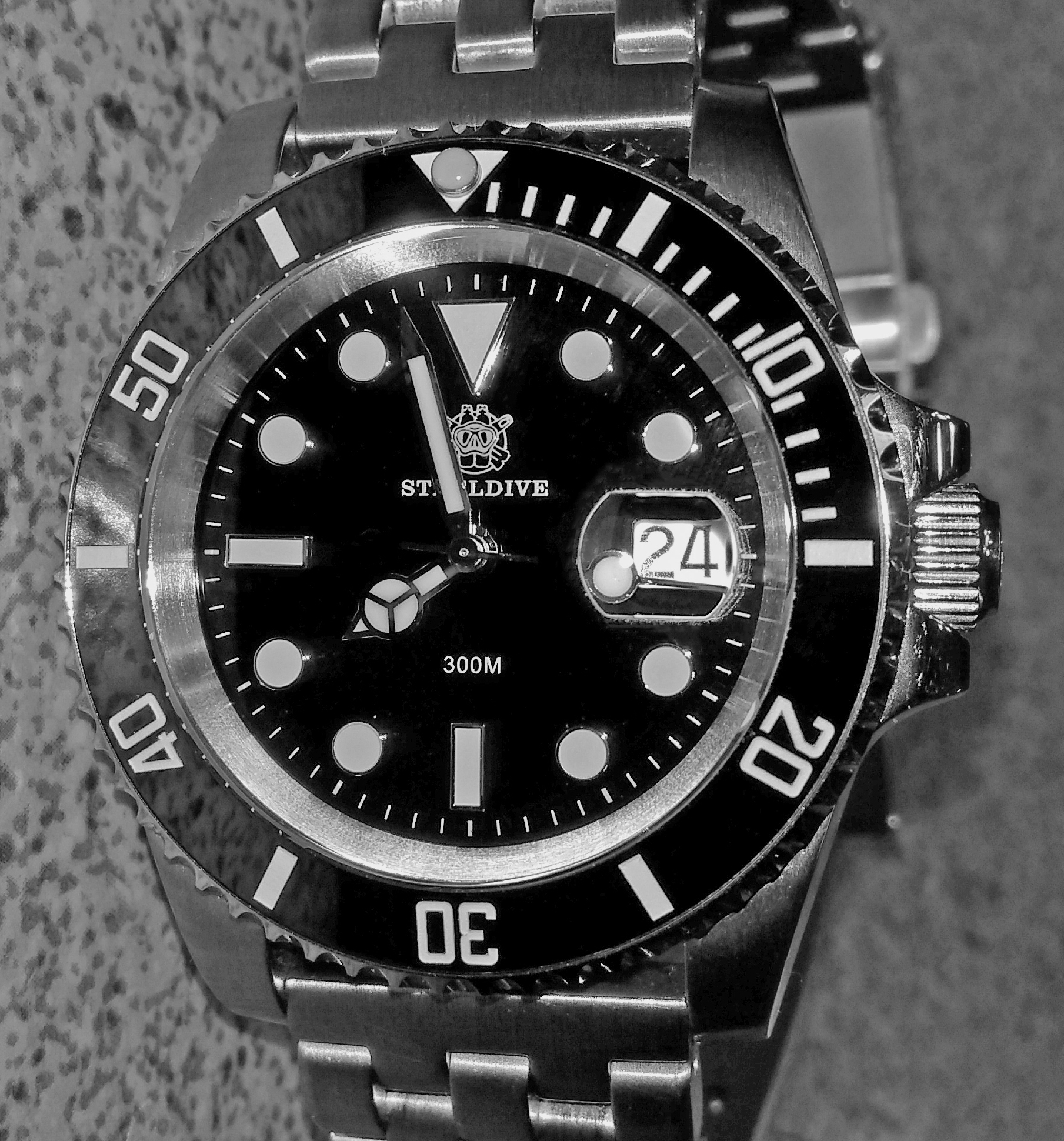
The number on a dive watch’s dial is the least informative thing about it. Two cases can both say 200m, and one of them has been through a documented gauntlet while the other has been through a pressure pot, once, on a good day.
I want to be exact about this, because the internet is not. “ISO certified” gets thrown around as if a stamp had been pressed into the case back by a government inspector. The reality is more interesting and, in one important way, less flattering. It is still the reason I think the Citizen Promaster NY0086 carries more meaning than a bigger number from a brand that never names the standard.
What a plain 200m rating promises
Start with the boring half. A depth figure on a watch is a pressure statement. It says the case was held under a pressure that corresponds to some depth of water. I covered the mechanics in the Watch School lesson on water resistance, so I will not repeat the whole thing. The short version is that the figure is a static test result, not a diving recommendation.
What the figure does not say is anything about the rest of the watch. It does not say the dial can be read in the dark. It does not say the bezel will behave when you knock it against a rock. It does not say the bracelet will stay attached to the case when something heavy pulls on it. Since the standard tests far more than depth, my inference is that a depth rating alone cannot tell you a watch meets it. Depth is one line on a longer list.
That longer list is the whole point.
What the Diver’s designation adds
ISO 6425 is the international standard for divers’ watches. The floor is a rating of 100 meters, and the watch is tested to 125 percent of its rated depth. Do the arithmetic on a 200m watch and you land at a lab pressure equal to 250 meters of water. I read that margin as a cushion for aging gaskets and imperfect real-world conditions, though Aquastar states only the figure and not the reason.
Then the standard keeps going, which is where it separates itself from a simple depth claim. According to Aquastar, the watch has to be readable in total darkness at a distance of 25 centimeters. It needs a luminous running indicator so you can tell the thing is alive, and a way to preset and read elapsed time. It goes through thermal shock, mechanical shock, magnetism and salt-water corrosion testing, and the strap or bracelet gets checked for strength.
The Slender Wrist adds a few specifics. The crown must handle pressure equal to at least 25 percent of the rated water resistance. The timing bezel has to be protected from inadvertent handling, which is why diver bezels turn one way only, with markings every five minutes. If you want the reasoning for the one-way bezel, the bezel lesson explains it better than I can in a paragraph. The practical logic, per The Slender Wrist’s reasoning on inadvertent handling, is simple: a bump should only ever make you surface early, never late.
Every item on that list is a behavior a person underwater might otherwise discover the hard way.
The part the marketing skips: who checks it
Here is where I have to take back the word in my own brief. I was asked to write about what a Diver’s 200m ISO designation “certifies.” The honest answer is that the standard lets the factory do the certifying itself.
Aquastar says the standard historically allowed manufacturers to test their own production to its requirements. The Slender Wrist draws the line more sharply: there is a difference between watches built to ISO 6425 standards and ones officially certified. Accredited third parties can do the certifying. But brands including Certina, Helm and Citizen build ISO 6425 compliant watches through in-house testing without seeking official certification.
So the NY0086 is, in the strictest vocabulary, a compliance claim by its maker, not an independently stamped object. I will say that plainly, because a site that preaches citation should not smudge the one term the whole topic turns on. If you see “ISO certified” in a listing, read it as “the manufacturer says it meets ISO 6425.” Which is a smaller sentence than it sounds, and I think a more useful one than the internet gives it credit for.
Why a self-declared standard still beats a bigger number
A skeptic would stop here. If the brand grades its own homework, what has the designation bought you?
It has bought you a commitment that can be checked and can be broken. When Citizen lists ISO6425 under case features on its own EU product page for the NY0086-16LC, it is naming an external, public, published test regime and attaching its name to it. A brand can be wrong about its own compliance, and it can be caught being wrong. That is a vastly different position from printing a depth figure that references nothing but itself.
Think about the incentive. A bare number costs nothing to inflate. A mention of a named standard with a dozen separate test conditions costs real engineering and real liability. A 1000m figure on an inexpensive case is a claim about a pressure vessel. A 200m figure tied to ISO 6425 is a claim about a watch.
I am not saying bigger uncertified numbers are lies. Many are probably fine. I am saying a number with no named test behind it tells me nothing about the other things that matter in water, and “probably fine” is a thin thing to bet a movement on. Aquastar’s own note makes the symmetry clear: a watch can meet every ISO 6425 requirement whether or not the maker prints Diver’s on the dial. The reverse is the worry. A watch can print an impressive figure and meet none of the rest.
I will give the designation its due without turning it into a halo. It also does not make a watch good. It makes a watch accountable on a particular list, which is a different virtue.
What the NY0086 actually puts on the table
Now the watch itself. The NY0086 has a 42 mm case, 20 bar of water resistance, and an automatic Caliber 8204 rated at minus 20 to plus 40 seconds per day. One US retailer lists it at a $325.00 MSRP against a current price of $160.67, with 200 meters / 660 feet of water resistance, a hack feature and a scratch resistant mineral crystal. That retailer’s page does not mention ISO 6425 at all, which tells you something about how thoroughly the standard gets lost between a manufacturer’s spec sheet and a shop listing. The designation lives on Citizen’s page and drops out in the retail copy.
Street prices move, so treat the $160.67 as a snapshot from the day this was written. If you want my longer take on the watch, the full NY0086 review covers where it wins and where it frustrates, and the head to head with the G-Shock GW-M5610U is the sharpest illustration I have of two watches sharing a rating and differing in kind.
What I care about here is the structure of the bargain. For well under the retail MSRP, you get a watch whose maker has put its name next to a published diving standard. The mineral crystal is the catch, and I will not pretend otherwise: the page I read lists mineral, not sapphire, and a scratched crystal on a daily wearer is a real cost. The movement’s accuracy window, minus 20 to plus 40 seconds per day, is a wide one, and anyone who obsesses about timekeeping will notice it. These are honest trade-offs at this money. They are not trade-offs in the thing the designation is about.
When I would not care about ISO at all
This is where I plant a flag a more diplomatic site would soften. Most people buying a dive watch will never dive. A desk diver, to use the term of endearment, needs a bezel they like, a lume that works on a dark commute, and a case that survives a pool. For that person, a plain 200m watch from a brand with a good reputation is a perfectly sensible purchase, and I would never tell them otherwise.
The designation matters when you want the object to hold up to the job its dial advertises, or when you want one signal that a brand is willing to be held to something. Used as a filter, it removes watches whose only argument is a large figure. Used as a god, it fools you into thinking a self-declared test regime is a guarantee.
So my rule is short. Prefer the watch that names its standard. If two watches are otherwise close, the one that says ISO 6425 gets the nod, and the one that only says a big number has to win on something else. I would not pay a premium for the word itself. I would pay attention to it.
What to look for before you buy
Check the maker’s own page, not the retailer’s, for the standard by name. Retail copy drops it, as the NYWatchStore listing shows. Look for the case-feature line or the spec table, and treat its absence as a question to ask, not an answer.
Check the practical hardware the standard implies. A unidirectional bezel with five-minute markings. A screw-down crown. Lume you can read. None of these prove compliance, but a watch that claims the standard and lacks them has told you something.
Ignore the size of the depth figure. Past a few hundred meters it is decoration for nearly every wearer, and my reading of the standard is that the margin matters more than the headline.
And accept the limits. Compliance is a manufacturer’s statement unless a third party has verified it. That is true of the Citizen, and it is true of the others. Knowing it makes you a better reader of every spec sheet you will ever see.
Frequently asked questions
Is a 200m dive watch automatically ISO 6425 compliant?
No. The standard covers a long list of tests beyond depth, so a depth rating on its own is not evidence of compliance (our inference, not a claim the sources make). A watch can meet them without printing Diver’s on the dial, or print a big number without meeting them.
Does ISO 6425 mean a watch was certified by an outside body?
Not necessarily. The standard historically allowed manufacturers to test their own production, and accredited third parties can certify, but brands such as Citizen build compliant watches through in-house testing without seeking official certification. Read “ISO certified” in a listing as the maker’s claim of compliance.
What does ISO 6425 test besides water depth?
Per the sources above, it covers the 125 percent overpressure test, legibility in darkness at 25 centimeters, a luminous running indicator, elapsed time setting, thermal and mechanical shock, magnetism, salt-water corrosion, crown sealing and strap strength. The bezel must also be protected against inadvertent handling.
Does the Citizen Promaster NY0086 carry the ISO 6425 designation?
Citizen’s own EU product page for the NY0086-16LC lists ISO6425 under case features, alongside 20 bar of water resistance. One US retailer listing I read did not repeat the mention, so check the manufacturer’s page.
Is a bigger water resistance number better?
Not by itself. A larger figure with no named standard behind it says nothing about the dial, bezel, crown or bracelet. A 200m watch tied to ISO 6425 makes a broader and more checkable claim.
Jules Marlowe WatchHypeHQ
- Aquastar: What Is ISO 6425? The Dive Watch Test Standard · Fetched this run. States that a watch must be rated to a minimum of 100 meters, is tested to 125 percent of its rated depth, must be readable in total darkness at 25 centimeters, needs a luminous running indicator and a way to preset and read elapsed time, and goes through thermal shock, mechanical shock, magnetism and salt-water corrosion tests plus a check of strap or bracelet strength. States that the standard historically allowed manufacturers to test their own production to its requirements, and that a watch can meet every requirement whether or not the maker prints Diver's on the dial. Does not itself say that a depth rating alone fails to guarantee compliance; that point in this piece is our own inference from the length of the test list.
- The Slender Wrist: about ISO 6425 for dive watches, a comprehensive resource · Fetched this run. States the crown must handle pressure equal to 25 percent or more of the rated water resistance, that the timing bezel must be protected from inadvertent handling through unidirectional rotation with markings every five minutes, and that further tests cover condensation, shock, temperature, corrosion and pressure. Distinguishes watches built to ISO 6425 from ones officially certified, says accredited third parties can certify, and names Certina, Helm and Citizen as brands building ISO 6425 compliant watches through in-house testing without seeking official certification.
- Citizen Watch official EU store: NY0086-16LC · Fetched this run. Lists water resistance of 20 bar, ISO6425 under case features, an automatic Caliber 8204 with accuracy of minus 20 to plus 40 seconds per day, a 42 mm case and a crystal listed as crystal glass. Lists a price of €249.00.
- NYWatchStore: Citizen Promaster Diver Automatic NY0086-16L · Fetched this run. Lists a $325.00 MSRP against a current price of $160.67, water resistance of 200 meters / 660 feet, Citizen Caliber 8204 automatic with a hack feature, a 42mm case diameter and a scratch resistant mineral crystal. Does not mention ISO 6425 on the page.