Tissot PRX Powermatic 80:
the benchmark holds.
Four years after it reset the integrated-steel market, the PRX still asks a question no rival has answered: what exactly do you get for spending three times more?
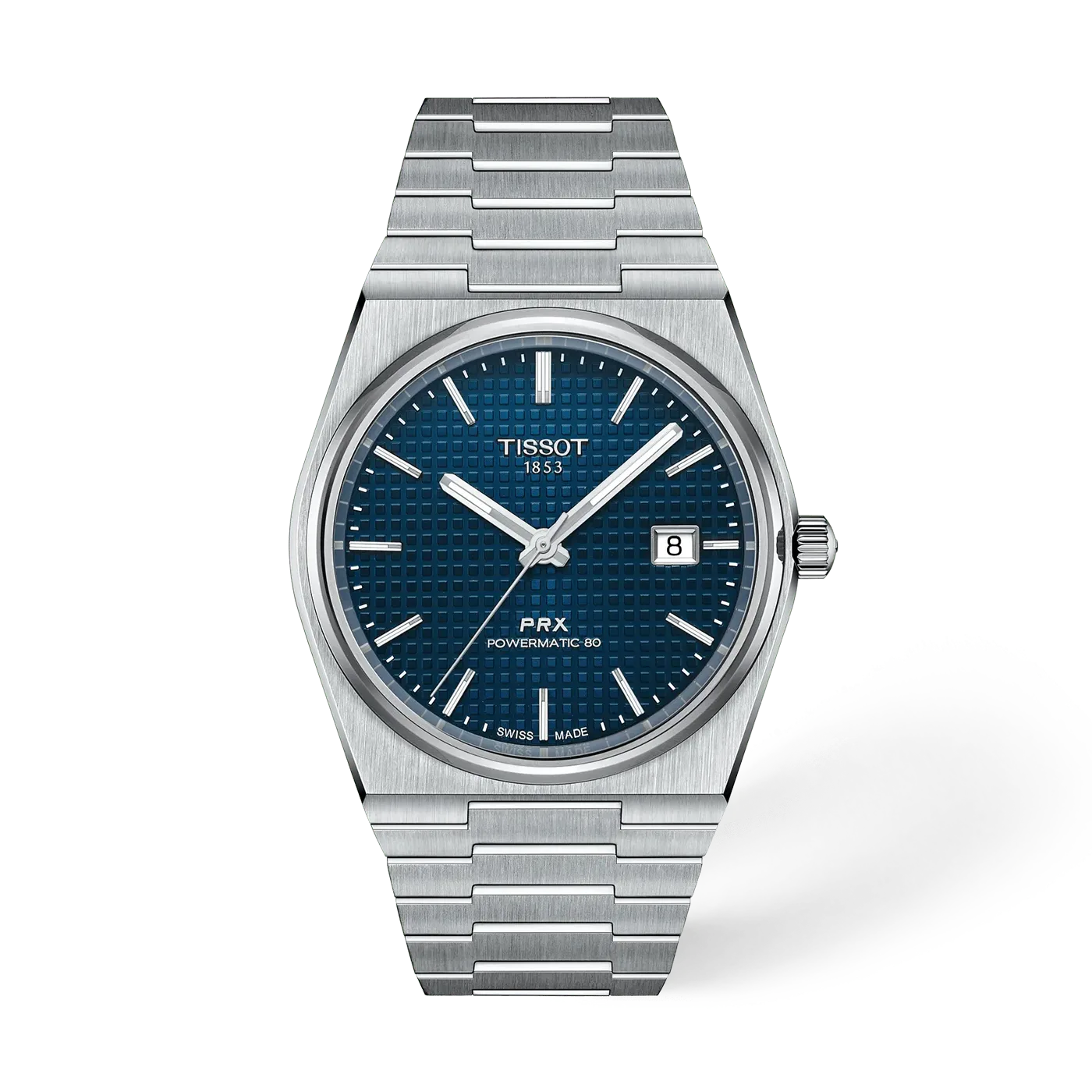
Four years after the PRX landed, nobody has answered the only question that actually matters about it: what does spending three times more buy you? Read off both spec sheets, the honest answer is a millimetre and a clasp that adjusts. That is the whole of it, and it is the reason this watch is still the benchmark rather than a former one.
The case for it is printed on the sheet
Tissot publishes its numbers without theatre. 40mm across, 10.9mm thick, 100m of water resistance, sapphire, and a Powermatic 80 running at a leisurely 21,600vph to bank an 80-hour reserve. Slow beat, long reserve. Tissot took the half of that trade you use on a Monday morning.
On the wrist those figures perform the trick the integrated genre is built on. The watch wears flatter and wider than 40mm suggests, and it slides under a cuff that a diver of the same diameter would snag on.
Then the bracelet, which is really the argument. Brushed flat links, a butterfly clasp, no visible screws. Nobody else selling in this bracket is taking that job anything like as seriously.
The case against it is on your wrist
And then you sit down to size the thing. The clasp has no micro-adjust, which is the single specification where the benchmark shows its cost ceiling. If Tissot fixed one thing tomorrow, I would ask for that.
Two smaller notes, both real, neither fatal. The Powermatic 80’s silicon balance spring shrugs off magnetism, but 21,600vph gives the seconds hand a faintly stepped sweep that will irritate exactly the sort of person who reads reviews like this one. And the waffle dial photographs better than it reads at arm’s length. Neither of those changes the verdict. Both belong inside it.
So, worth the hype?
Yes, for a comparative reason rather than a sentimental one. Christopher Ward’s The Twelve beats it on case thickness (9.95mm), beat rate (28,800vph) and clasp adjustment, charges roughly double for those wins, and hands back half the power reserve doing it. That is a genuine choice and a defensible one. If the details are the point for you, buy The Twelve and enjoy it.
But if the question is which integrated-steel watch to put in front of somebody who has not yet worked out how much they care, the PRX is still the answer. It has been for four years now, which is a compliment to Tissot and an indictment of everyone still charging double for less.
Computed from the published formula. See the maths →
POWERMATIC 80 · 80H
100M WR · SAPPHIRE
INTEGRATED BRACELET · NO MICRO-ADJUST
Retail partners are not live yet. When they are, these become affiliate links. Commissions never touch the score.
- Tissot official site (US) · Every dimension, movement and rating quoted in this review comes from Tissot's own published PRX specification. The direct product URL was not machine-verifiable at build time, so the manufacturer domain is cited instead.
- Christopher Ward official site · Comparison figures for The Twelve, used in the value section.
Second opinions.
CREATOR VIDEOS · EMBEDDED WITH FULL CREDITCreator videos appear here as YouTube embeds so every view lands on the creator's own channel. We never re-host or re-cut another reviewer's footage.