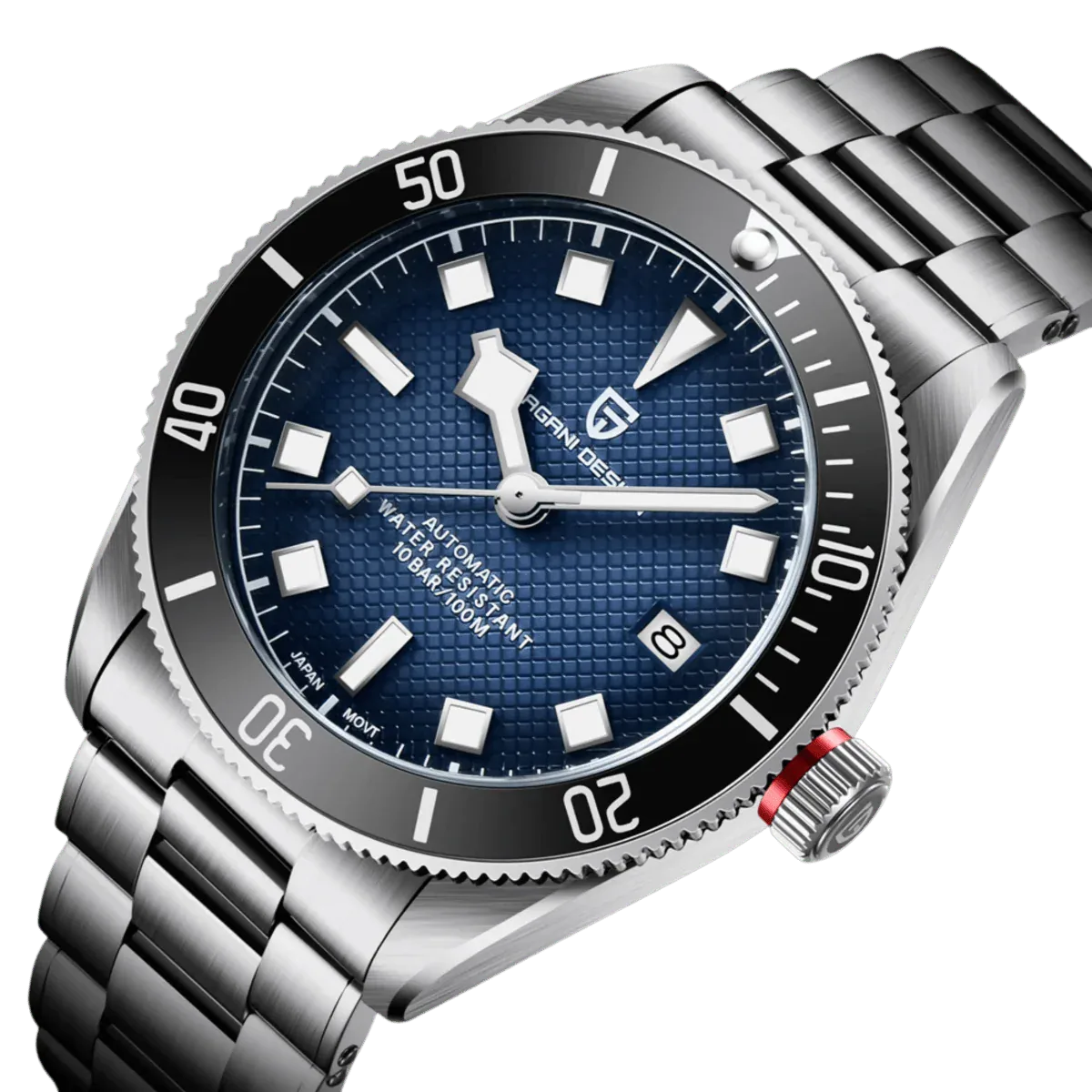
Two hundred dollars is a strange ceiling. It is too low for the brands most watch buyers have heard of and too high for the throwaway quartz that used to define the category. In between sits a small crowd of divers that put an automatic movement and a sapphire crystal in a steel case for the price of a nice dinner. This guide is about that crowd, and about being straight on what the spec sheets do and do not say.
Five watches clear the line. We held them to a strict rule: the whole price band has to sit under $200, not just the cheapest colorway. Three are Steeldives, two are Pagani Designs, and between them the top of the range runs from $139 to $190. That rule is why a few popular names are missing, and we will get to them.
What two hundred dollars actually buys
Start with what is the same across the list, because it is a lot. Every pick here is an automatic. Every pick has a sapphire crystal, and each of those is listed as anti-reflective or AR-coated in the inventory. Every pick comes on a steel bracelet or offers one.
The honest consequence is that the differences between the picks are no longer about whether the basics are present. They are about size, water resistance, movement, and how much the maker is willing to tell you. Those are the four axes this guide ranks on.
Size is the first filter, and it is the one most people get wrong
The five watches span from 40mm to 47.5mm in case diameter, and from 13mm to 15mm in thickness. That is a wider range than the price suggests, and it matters more than any other number on the list.
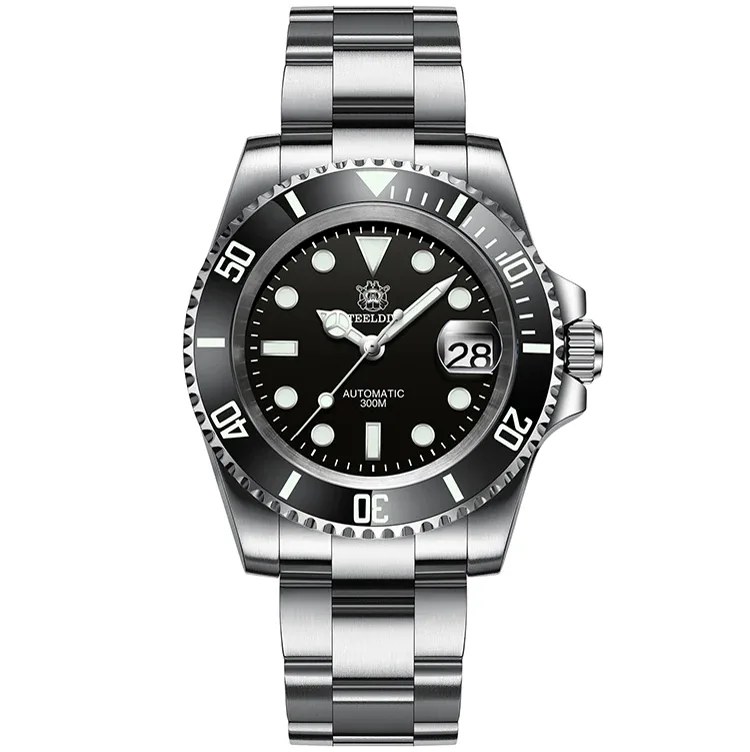
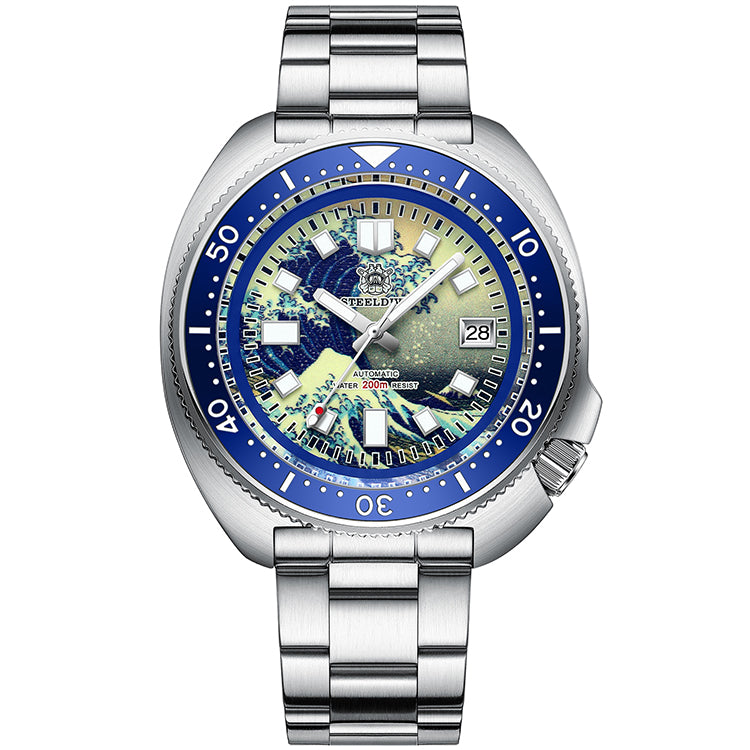
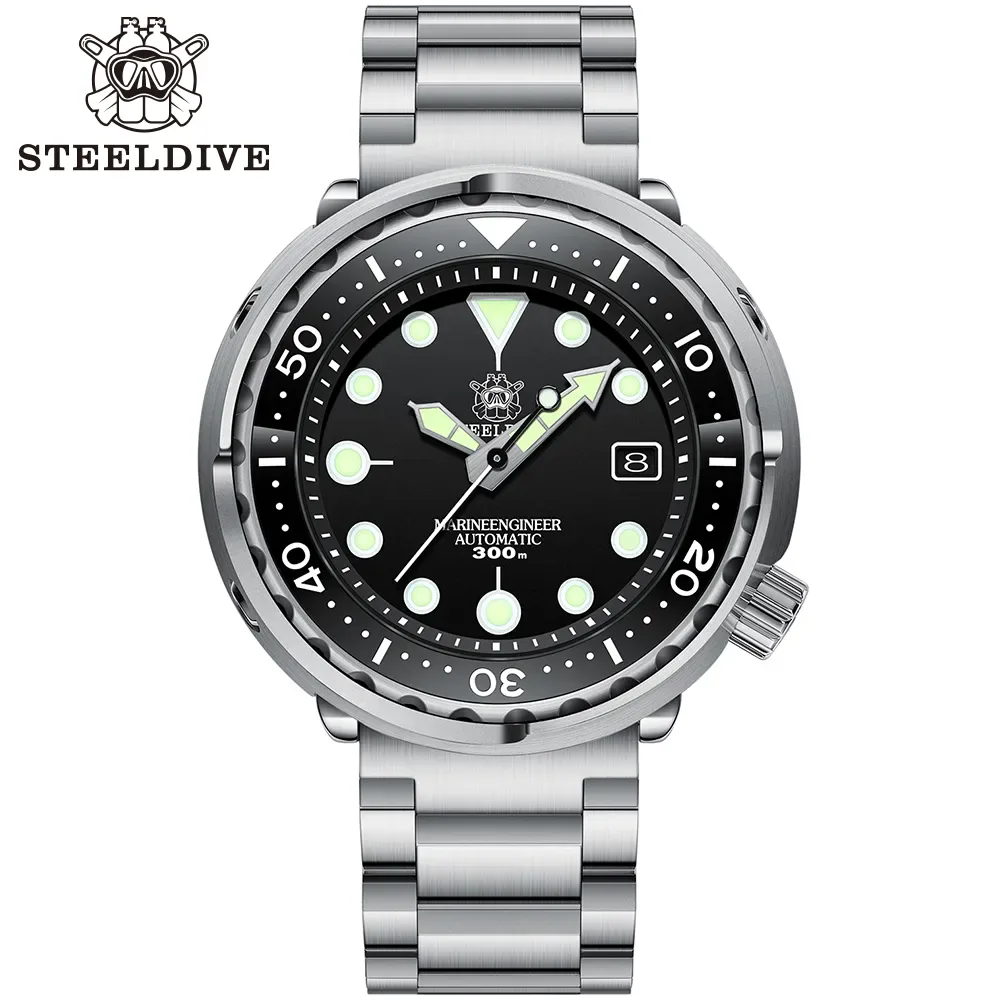
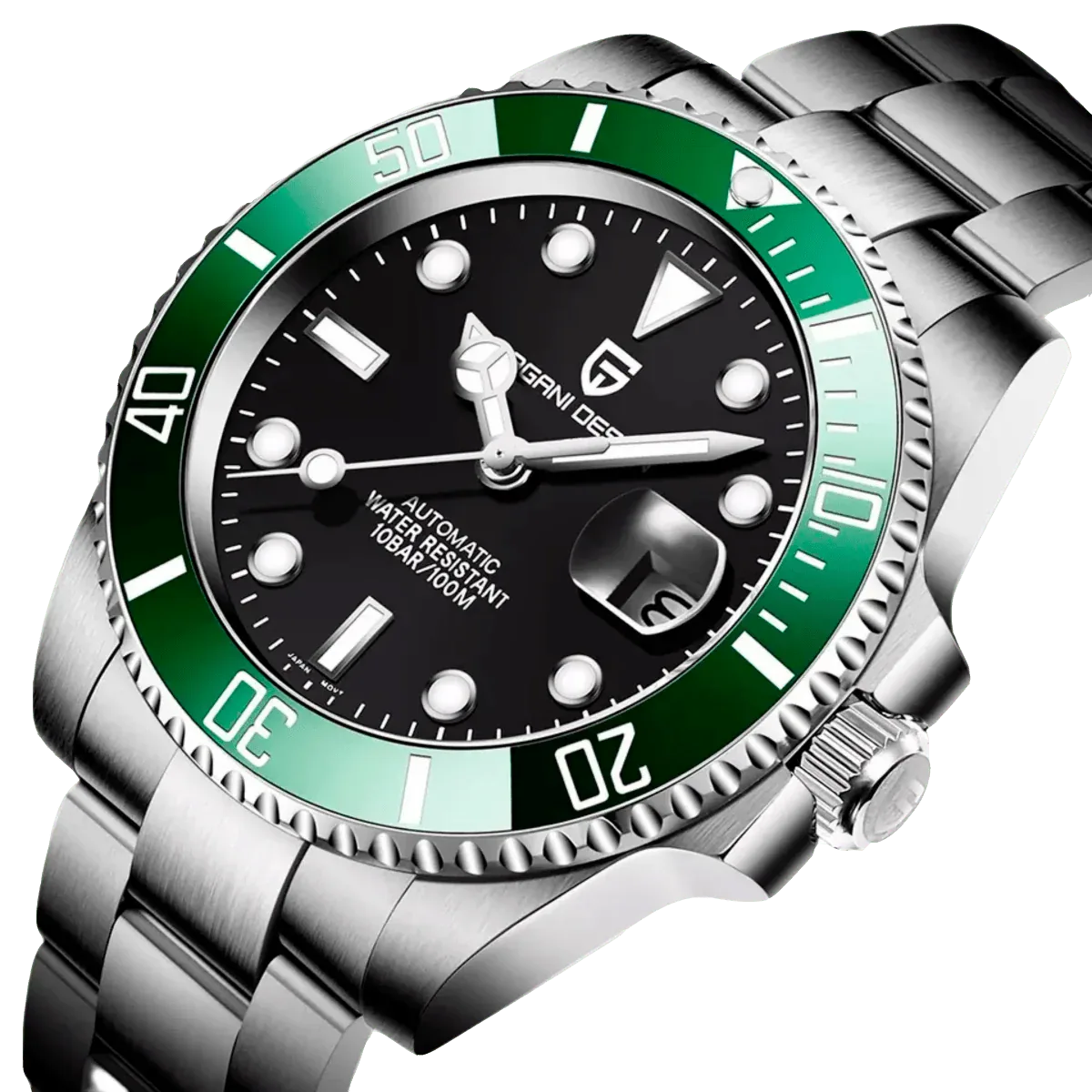
Start with diameter. The Steeldive SD1953 is 40.5mm without the crown. The Pagani Design PD-1661 is 40mm. These are the two you can wear without thinking about it. The Pagani PD-1671 is 42mm, the Steeldive SD1970 is 43.8mm, and the Steeldive SD1975 is 47.5mm. Those are real jumps. The SD1975 is seven and a half millimetres wider than the PD-1661, which is not a rounding error on a wrist.
Then lug to lug, which is the number that decides whether a watch overhangs. Here the inventory is uneven. Steeldive publishes it for all three of its watches: 47.7mm for the SD1953, 46.8mm for the SD1970 and 44mm for the SD1975. Pagani Design publishes it for neither of its two. That is not a reason to rule them out, but it is a reason to be careful: you are buying the PD-1661 or PD-1671 without the one measurement that tells you if it fits.
The SD1975 deserves a note here. Its case is the widest on the list at 47.5mm, but its lug to lug is the shortest at 44mm. A wide, short case behaves differently on the wrist from a narrow, long one. We cannot tell you how it looks on yours. We can tell you that the two numbers disagree about how big the watch is, and that you should read both.
Thickness is the last piece. The thinnest watch here is 13mm and the thickest is 15mm. That is a chunky range for an everyday watch, and no pick escapes it. If you wear fitted cuffs, every one of these will be noticeable. The category has not solved this at the price, and we are not going to pretend it has.
Lug width is a smaller point but a practical one. Three of the five use 20mm lugs. The PD-1671 uses 21mm and the SD1975 uses 22mm. If you plan to change straps, that narrows your choices, and it is in the spec sheet for anyone who looks.
Reading the water resistance line
Here we need to be careful, because the numbers on this list are printed ratings and nothing more. The SD1953 and SD1975 are listed at 300m. The SD1970 is listed at 200m. The two Pagani Designs are listed at 100m. We will not tell you what any of those means for your swimming, snorkelling or diving, because the inventory does not support advice beyond the printed rating, and a guide that invents it is the kind of guide this site exists to not be.
What we can say is what the sheet says. None of these entries states an ISO diver’s certification. The word on the case may say diver, but the certification line in the inventory is empty. That is worth knowing if certification is the reason you want a diver in the first place.
We can also say that the ratings differ by a factor of three across the list, and that the Pagani Designs sit at the bottom of it. If a number on the dial is part of why you are buying, the Steeldives are the ones that print the bigger numbers. If you do not care, ignore this section and buy for size.
The movement line, and why the scores differ
The Steeldive watches use the NH35, described in the inventory as a Seiko-family caliber as fitted by Steeldive. The Pagani Designs use the Miyota 8215. Power reserve is printed for all five: 41 hours for the three Steeldives and the PD-1661, 42 hours for the PD-1671. In other words there is almost nothing between them on that line, and you should not choose among these on power reserve.
The hypescore does separate them, though. The Steeldives score 17 on movement and the Paganis score 14. The inventory gives no accuracy figures for any of these, and we are not going to supply one. The score is our rating, not a measured rate. If you want to know how your example runs, you will find out after a week on the wrist, and that is true of every mechanical watch at every price.
One thing worth saying about the NH35: Steeldive lists it as the “Japan NH35”, fitted by the brand. The inventory also lists it in watches from Cronos, San Martin and Seestern, so on this list the movement is not what separates one maker from another. The case, the bracelet and the size do.
How the five compare on the total score
The hypescore is a sum of four sub-scores: movement, build, value and wearability. The ranking here follows the totals, and the totals are in the picks above. They run 82, 78, 74, 70 and 68. Nothing here scores above 82 and nothing scores below 68.
The sub-scores are more interesting than the totals. The SD1953 takes 24 on value, the best on the list, with 22 on wearability. The SD1975 scores 20 on build, the best of the five, and 16 on wearability, the worst. The two Paganis score 16 on build, which is where the price shows. This is the shape of the category: you give up a little on build as the price falls, and you give up a lot on wearability when the case gets very large.
Why the ranking looks the way it does
The SD1953 wins because it has no hole in its sheet and no obvious weakness. It is a 40.5mm case with printed lug to lug, power reserve, crystal and clasp details, at a 300m rating, for under $150. Nothing else on the list matches it on completeness.
The SD1970 comes second because it is the same family in a bigger case with a lower water resistance rating. The third place of the SD1975 comes from its size: it is the most extreme watch here, and the lowest wearability score drags it below the SD1970 even though its rating is the higher one.
The Paganis come fourth and fifth because their movement scores are lower and they leave out the lug to lug, but each has a case for itself. The PD-1661 is the cheapest automatic on the list and still has a sapphire crystal and a printed power reserve. The PD-1671 costs more for the larger case and the steel bracelet with leather strap included, and gives nothing back on the rating.
What to skip, and why
A guide with a price ceiling has to say what it left out. Several watches in our inventory look like they belong here and do not, and the reason is always the same: the price band crosses $200.
The Seestern S434 starts at $190 and runs to $230. The Cronos 36mm Explore L6019 runs $205 to $248, and the Cronos L6005 runs $219 to $239. The San Martin SN0138-G runs $218 to $238. Every one of those is a plausible diver, and any one of them might be the better buy on a given day at a given discount. But a band that crosses the line is not a $200 watch, and we would rather leave them out than stretch the definition.
We have also left out the Orient Kamasu and the Seiko 5 Sports SRPD55, both well above the ceiling at the bands we list. They are the watches people usually mean when they say a cheap diver, and they are worth knowing about if you can stretch. They are also not what this guide is about.
As for the five here, some skip advice. If you have a small wrist, skip the SD1975 and the SD1970, and start with the SD1953 or the PD-1661. If you will change straps often, the 21mm and 22mm lug widths on the PD-1671 and SD1975 are the ones to avoid. If you want a lug to lug number before you buy, the Paganis cannot give you one. And if the ISO diver’s certification matters to you, none of these entries states it, so look elsewhere.
The caveat on these sources
Some of this inventory is more solid than the rest. The SD1953 and both Pagani Designs are read from the makers’ own storefronts. The SD1970 and SD1975 are not: Steeldive’s own pages returned errors to our fetches, so those two are corroborated through third-party listings and reviews. We have used the figures because they agree across sources, and we have said so in the catch line for the SD1970. If you are about to spend money on either, check the maker’s page first.
What the money is for
The point of a cheap automatic diver is not that it matches an expensive one. It is that it gets you the main parts of the experience for the cost of a pair of shoes: a mechanical movement, a crystal that does not scratch easily, a bracelet that fits. Everything else is a matter of taste and tolerance.
If you want one answer, buy the Steeldive SD1953. It is the best of the five on the hypescore, it has the most complete spec sheet, and it is in the right size range for most wrists. Pick the SD1970 if you want more presence. Pick a Pagani Design if you want the lowest price and can live with the gaps. And if you want the loudest option on the list, there is the SD1975, with the case size to match.
This guide launches with five picks and has room for six. We would rather hold the last slot for a watch we can cite line by line than fill it with one we cannot.