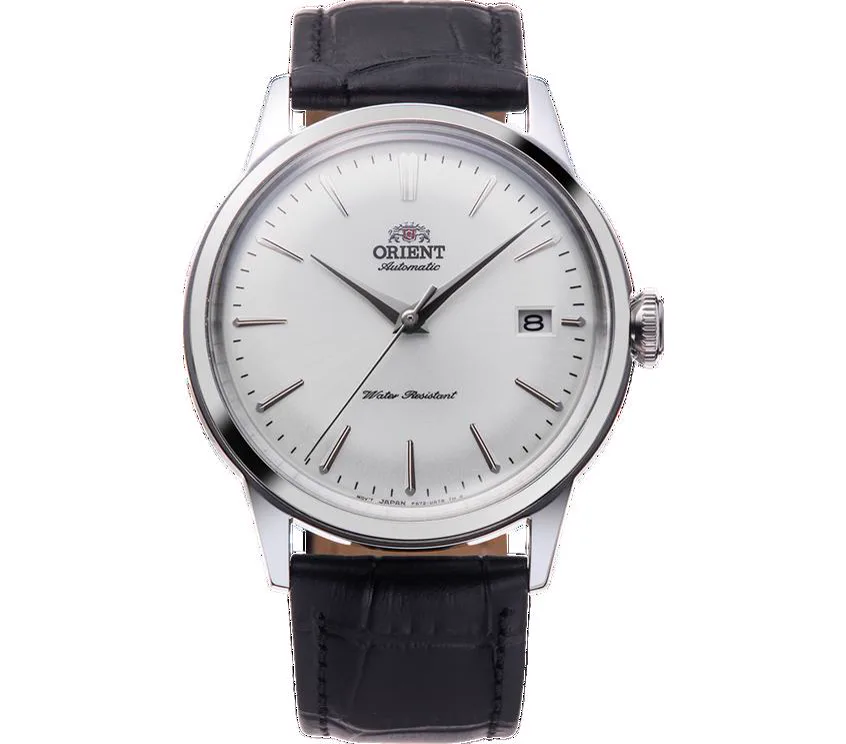
The office watch is the most underrated brief in the hobby. It sounds like a compromise, and it is, but a compromise with a clear set of tests. It has to look right at 9am across a table. It has to be unobtrusive enough that nobody comments on it in a meeting. And it has to carry on to dinner, a train or a weekend without anyone, including you, feeling underdressed or overdressed. Most watches fail at least one of those. The five below pass all three on the numbers we can cite.
This is a guide about fit rather than flash, so the spec sheet matters in a particular way. You are not hunting for the highest water resistance or the largest reserve. You are looking for the numbers that decide whether a watch disappears into your day or fights it.
What the office actually asks of a watch
Start with thickness, because it is the figure people forget. A case diameter tells you how a watch looks from above, but the thickness tells you whether it will sit politely under a sleeve or announce itself every time you reach for a keyboard. The thinnest watch in this guide is the Christopher Ward The Twelve at 9.95mm. The thickest of the five is the Seiko Presage Cocktail Time at 11.8mm. That is not a wide gap, which is the point: all of these live in a band that most wardrobes can absorb. Compare that with the divers elsewhere in the inventory, several of which run to 13mm and beyond, and you can see why this list looks the way it does.
Next is diameter, and here the picks cluster hard. Orient Bambino 38 at 38.4mm, Presage at 38.5mm, and then the Tissot PRX, The Twelve and the Tissot Gentleman all at 40mm. Nothing here is above 40mm. That is deliberate. Office wear tends to reward the middle of the range, and the sheet bears that out. The 38mm watches suit a smaller wrist or a more traditional taste, the 40mm watches suit a wider wrist or a preference for presence.
Then there is the crystal. This is where the office and the weekend pull in different directions. A mineral crystal is acceptable on a watch that lives in a drawer and a desk. It is a more nervous proposition on one that goes to a hike or a beach. Three of our picks have sapphire (the PRX, The Twelve, the Gentleman). Two do not: the Presage uses box-shaped Hardlex and the Bambino a domed mineral crystal. Both are fine choices, and both have a reason, which we explain in the pick. But if the watch has to take knocks, sapphire is the line to draw.
Finally, water resistance. Three of our picks are rated to 100m. The Presage is 50m and expressly not a diver’s rating. The Bambino is 30m. We will not tell you what those numbers allow you to do beyond what is printed, because the printed rating is all we can stand behind. What we can say is that the spread tells you something about intent. The 100m watches are the ones built to leave the office. The 30m and 50m watches are built to stay close to it.
Reading the movement line
The movement line is the part of the sheet most easily misread in this category, so it is worth slowing down on.
Power reserve is the number that matters most for a watch you will not wear every day. Two picks, the Tissot PRX and the Tissot Gentleman, carry the Powermatic 80 and its 80-hour reserve. In practice, that is the difference between a watch that is still running on Monday after you took it off on Friday evening and one that has stopped. The Twelve, at 38 hours, is the shortest on the list. The Presage lists approximately 41 hours. Neither of those is a fault; they are the usual figures for movements in this class. But if you rotate watches, the reserve is the line that decides whether a watch is convenient or a chore.
Hacking and hand-winding are the quiet quality-of-life features. The Presage’s 4R35 and the Bambino’s F6724 both offer them, per the inventory. Hand-winding lets you top up a watch that has stopped without strapping it on and swinging your arm, and hacking stops the seconds hand so you can set it against a reference. Neither shows in a photograph, and both are the kind of thing you notice weeks into ownership. For the others, the inventory does not state them, so we say nothing about them.
The Twelve’s Sellita SW200-1 is worth a line. Its movement sub-score is 20, one point under the Powermatic 80’s 21, and the gap lines up with the reserve: 38 hours against 80.
The hypescore, in context
Every pick here carries a hypescore, and it is worth saying what it tells you and what it does not. It is the sum of four sub-scores: movement, build, value and wearability. The PRX scores 21, 21, 23 and 19 for a total of 84. The Twelve scores 20, 22, 19 and 22 for 83. The Presage scores 19, 20, 21 and 21 for 81. The Bambino scores 19, 19, 24 and 19 for 81. The Gentleman scores 21, 20, 19 and 20 for 80.
Notice how close those totals are. Four points separate first from last. That is not a weakness of the list; it is the nature of the category. When the brief is narrow, the good answers bunch together, and the thing that separates them is not quality but which compromise you prefer. A higher score on value is a lower price; a higher score on wearability is a better case. They are not interchangeable, and the sub-scores are the part to read.
So the ranking below is a ranking of balance. The PRX sits first because it has no sub-score below 19 and the best value mark of the five. The Twelve is second because its build and wearability marks are the best on the list, and its price is what holds it back. If you care more about the case than the cost, swap them in your own head.
What the ceiling buys
There is no price ceiling on this guide, but there is a pattern in how the money lands. The Bambino is $180-260. The Presage is $380-450. The PRX is $650-725. The Gentleman is $700-950. The Twelve is $1,150-1,395. That is a spread of roughly six to one from bottom to top, and the hypescore moves from 81 to 84 to 83 across it. The most expensive pick is not the highest scoring, and the cheapest is not the lowest.
What the extra money buys, specifically, is thinness and finish at the Christopher Ward end, and reserve and sapphire in the middle. What the lowest price buys is the dial and the strap. Where you land depends on whether the watch will be your only one. If it is, spend toward the middle of the list, because the PRX and the Gentleman give you sapphire, 100m and 80 hours. If it is the dress watch in a rotation, the Bambino or the Presage does the job at a price that leaves room for something sportier.
Where each pick sits in a week
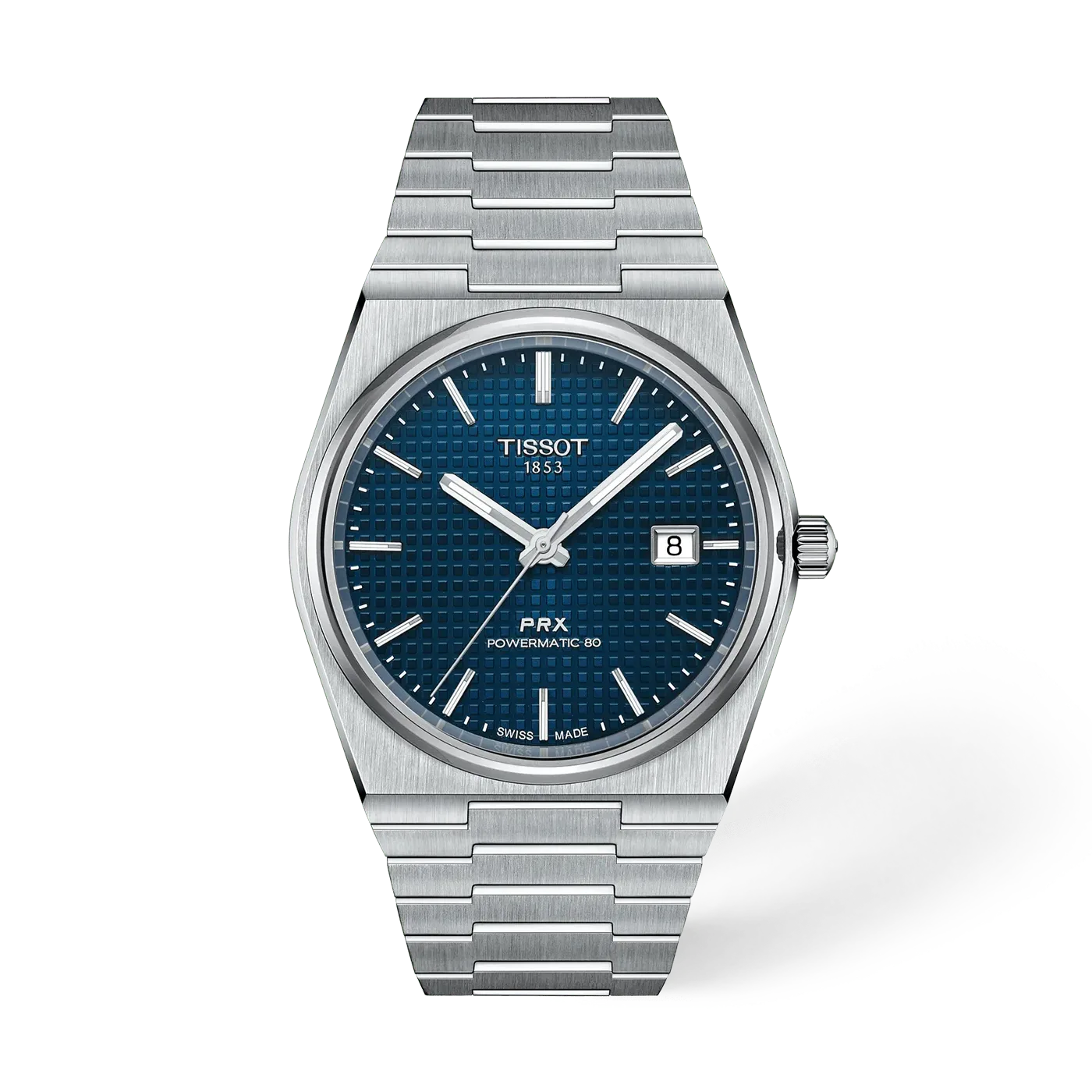
The PRX is the one to buy if you want a single watch to cover Monday through Sunday. Its integrated steel bracelet means it reads as formal enough under a jacket and sporty enough in a T-shirt. The compromise is the clasp, which has no micro-adjust, and the fact that the integrated design leaves no standard lug width for aftermarket straps. It will be a bracelet watch for as long as you own it.
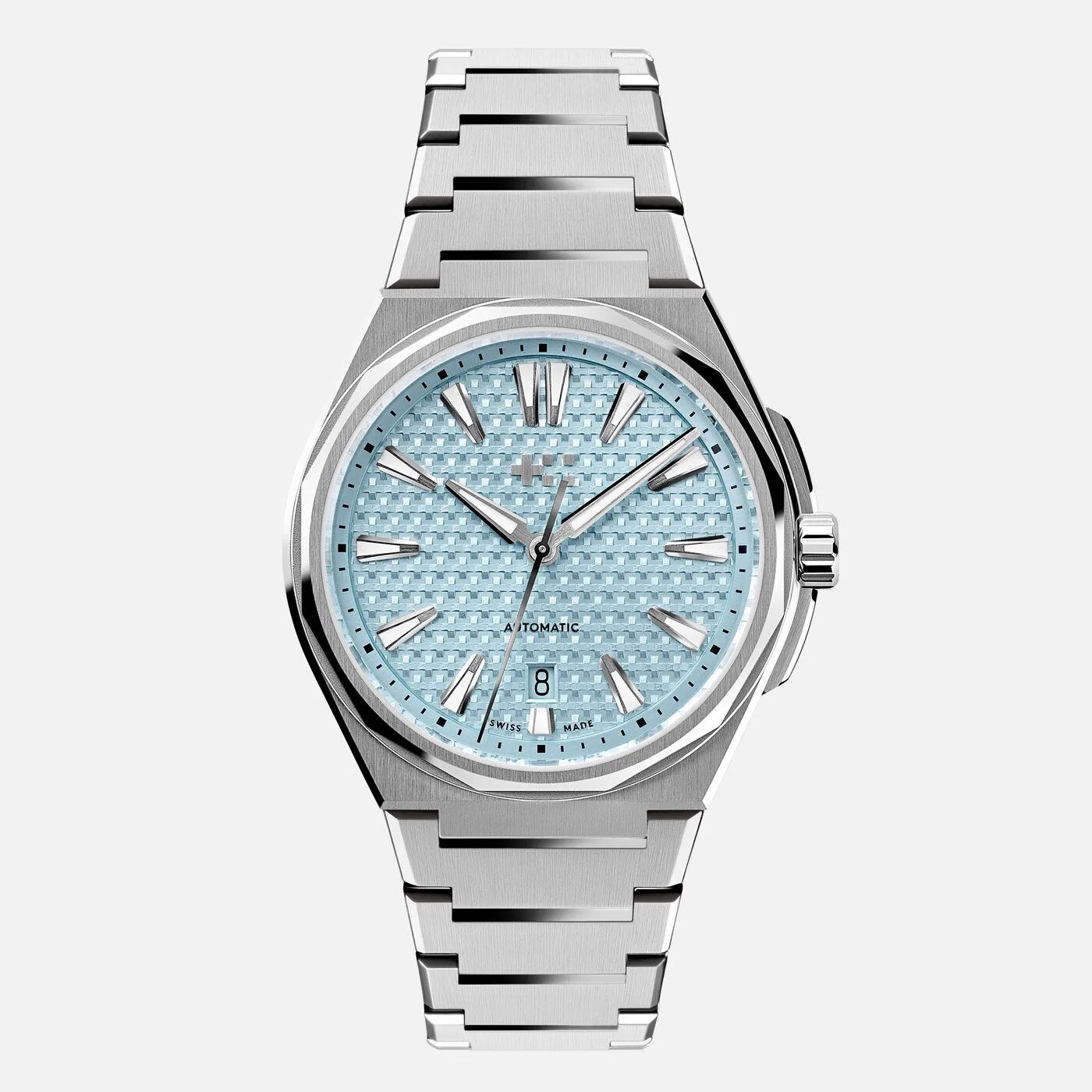
The Twelve is the same idea executed thinner, with a clasp that adjusts without tools. It is the pick for someone who wears a watch all day and notices when it is wrong by a few millimetres. The price and the 38-hour reserve are what you give up.
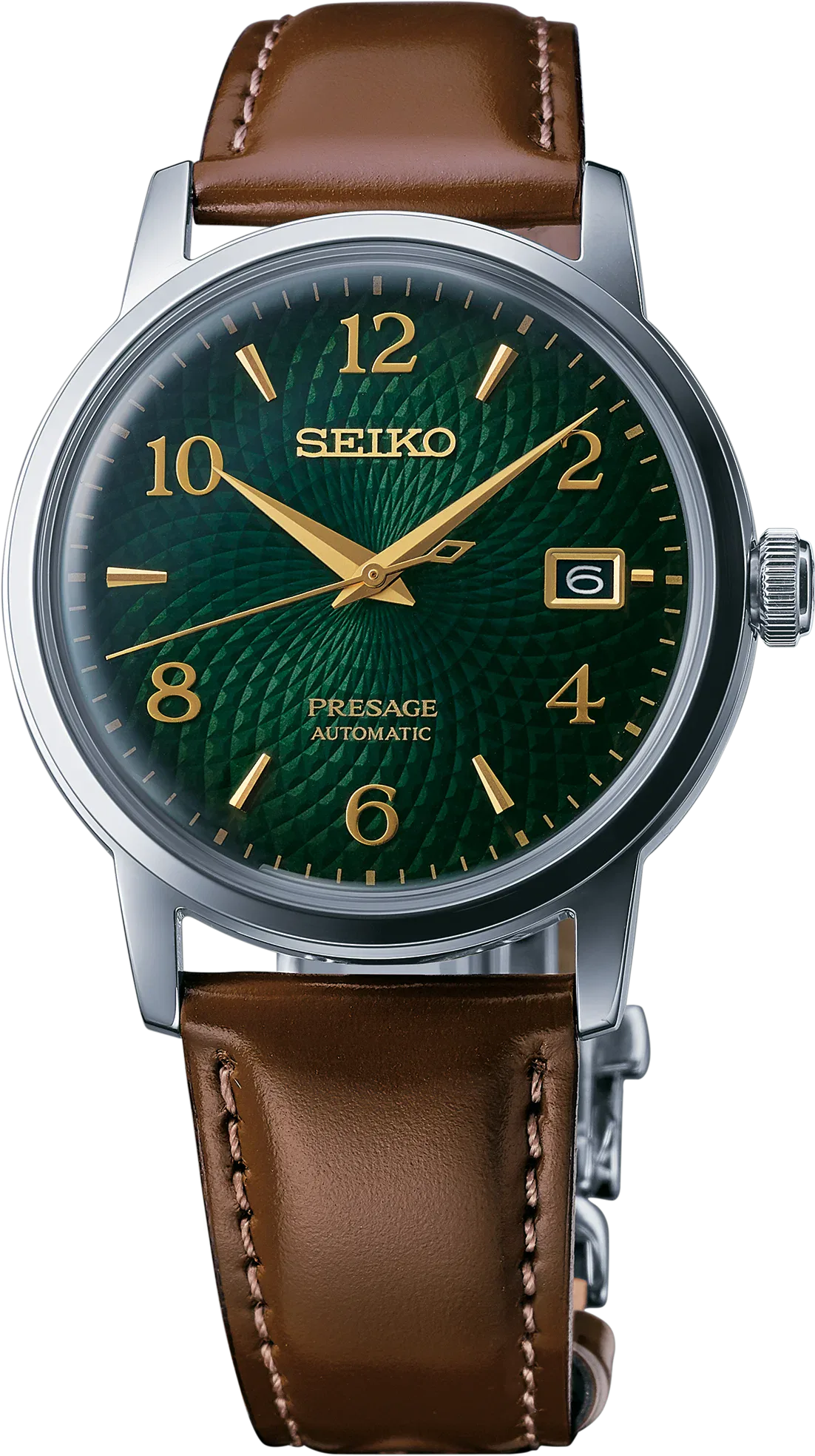
The Presage is the pick for someone who dresses a little. The green dial is the whole reason to own it, and the leather strap on quick-release bars means you can change the mood in seconds. It is not a watch for the pool, and Seiko does not claim otherwise.
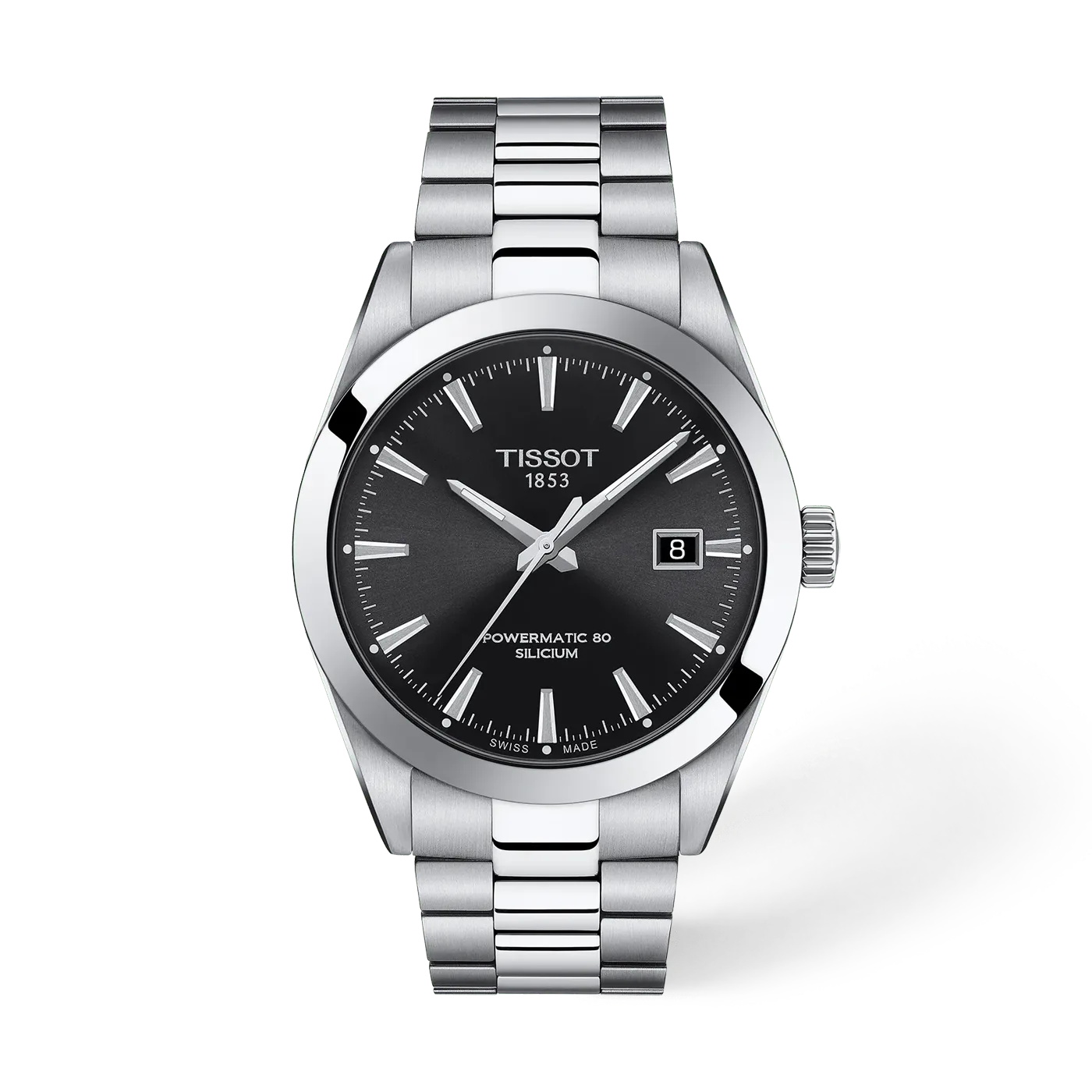
The Gentleman is the pick for someone who wants the traditional shape and a steel bracelet, with the 80-hour reserve of the PRX. It is the least surprising watch here, which is exactly what some offices call for. The street range is wide, so shop around within it.
The Bambino is the pick for someone who wants a dress watch without a dress-watch bill. It is the simplest sheet of the five and the cheapest, and it gives you the domed crystal and the light dial that the category is built around.
What to skip, and why
Several watches in our inventory look as if they might fit this brief and do not, and it is worth saying why, because the reasons are instructive.
The Junghans max bill Automatic is a handsome piece of design, at 38.0mm and 10.0mm thick with a domed sapphire crystal. It scores 73, with a value mark of 15, and at $1,595-1,695 it asks a lot for a 38-hour reserve. More to the point, Junghans states the 5 bar rating is for rain and splash only and not for swimming. That is honest, and it limits where the watch can go. If you want it for the design and nothing else, it deserves a look. As a one-watch answer, it is narrower than the picks above.
The Tank Must de Cartier is thin, at 6.6mm, and the solar quartz movement is claimed to run for about 24 months per full charge. It is a dress watch of the first order. It is also $3,900, carries a value mark of 13, and is rated to about 30m. The case measures 33.7mm by 25.5mm. It is a different kind of purchase, and it is not what most people mean by an office watch they will wear every day.
The Grand Seiko Snowflake SBGA211 scores 83 and has a 72-hour reserve, a titanium bracelet and a Spring Drive movement. It is also $6,795-6,900 with a value mark of 14. Excellent, and well outside a guide meant to be practical.
The Swatch Sistem51 has a 90-hour reserve, the longest on any automatic we list, and a price of $190-300. But the inventory does not publish its case size, water resistance or crystal in our verified sources, and we will not recommend a watch whose fit we cannot describe. If Swatch publishes those, it may earn a place.
The Timex Marlin Hand-Wound is 34mm, 10mm thick, with a domed acrylic crystal and a 30m rating, at $239-259. It scores 70. It is a lovely small watch, and a good one for a small wrist, but acrylic and 34mm put it outside the range of most readers here.
The Baltany Oyster Tribute S4015A is worth a mention. It is 36mm, 8.9mm thick, has a domed sapphire crystal and a Miyota 9039, at $300-340, and scores 80. It is a serious contender for the slim, small end of this brief. We left it out because its 200m rating is listed by Baltany with no ISO or Diver’s certification stated, and because it is a tribute design; if that does not bother you, it is the closest thing to a sixth pick.
The Casio F-91W, finally, is $18-25 and is wonderful, but it is a resin digital watch, and while it will suit many an office, it is a different guide.
How to choose among the five
Begin with the wrist. If you are at or below a modest wrist size, the Bambino and the Presage at 38.4mm and 38.5mm are the natural choices. If you are comfortable with 40mm, the field widens to the PRX, The Twelve and the Gentleman.
Then think about the strap. If you prefer leather, the Presage and the Bambino both arrive on it. If you want steel, the PRX, The Twelve and the Gentleman all do, and The Twelve has the nicest clasp of the three.
Then think about rotation. If this will be the only watch, buy for the reserve and the sapphire, which means the PRX or the Gentleman. If it is one of several, the choice is between the price you want to pay and the look you want to wear.
Finally, think about the weekend. If the watch is going somewhere you would prefer not to scratch the crystal, favour sapphire. If it will mostly stay close to a desk, the lower ratings of the Presage and the Bambino stop being a concern and the dials become the whole case for buying them.
None of these will be the wrong watch. That is the quiet virtue of the category: the gap between the good answers is small, and the gap between any of them and a bad answer is large. Buy the one whose catch you can live with.
This guide launches with five picks and grows to eight. Five watches we can cite line by line beats eight we cannot.